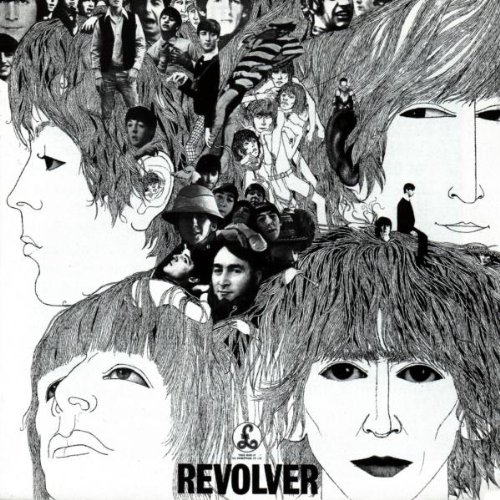
“Tomorrow Never Knows” (1966) – The Beatles

“Tomorrow Never Knows” (1966) – the Beatles * Written by John Lennon and Paul McCartney * Produced by George Martin * LP: Revolver * Label: Parlophone (UK), Capitol (US)
 
The US version of Revolver may rank as one of the more grievous hatchet jobs by Capitol Records. In this case, the label altered the original UK version by pruning three notable John Lennon songs altogether (“I’m Only Sleeping,” “Doctor Robert,” and “And Your Bird Can Sing”). But this action gave the two remaining Lennon branches a certain increase in gravitas, especially with both of them (“She Said She Said” and “Tomorrow Never Knows”) ending each side of the album, as if they were the only two slots that Lennon the new philosopher needed for his keynote words of wisdom. So extraordinary a production is “Tomorrow Never Knows” that all future attempts by anyone to do a cover version are rendered inadvisable and preemptively disappointing. Lennon reportedly found inspiration for the lyrics, including the opening line of “turn off your mind, relax and float downstream” from a book co-authored by Timothy Leary called The Psychedelic Experience: A Manual Based on The Tibetan Book of the Dead. Since then the conception of “turning off” the mind has traveled in status from being a radical “drop out” gesture, to one of regrettable escapism, to one of Buddha-endorsed mindfulness and a reliable 21st-century coping mechanism.
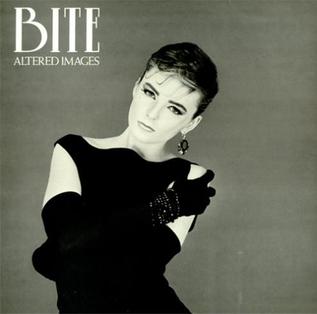
 

“Don’t Talk to Me About Love” (1983) – Altered Images

“Don’t Talk to Me About Love” (1983) – Altered Images * Written by Altered Images * Produced by Mike Chapman * LP: Bite * 45: “Don’t Talk to Me About Love” / “Last Goodbye” * Label: Epic (UK); Portrait (US) * Charts: UK #7

Altered Images’ development paralleled their target audience, starting with adolescent attitude (“Dead Pop Stars”), moving along to carefree teenage courtship (“See Those Eyes”), then winding up at the adult singles club (“Don’t Talk to Me About Love”). It’s clear that Mike Chapman, who produced half of their final album Bite, had a clearer conception of what to do with his Scottish pop ingredients—especially Claire Grogan’s novelty vocals and their anti-rockist guitars—than did Tony Visconti, who mishandled the rest. Few producers could work with disco as a utility like Chapman, as his output with Blondie confirms. Three songs from Bite, all Chapman’s, endure as charming mementoes. “Change of Heart” and “Another Lost Look” are two of them (listen to “Another Lost Look” on vinyl, not the CD, which uses a live version). The third is “Don’t Talk to Me About Love,” one of the era’s more sparkling demonstrations of disco’s ongoing hold on British new pop, taking all the non-rap virtues of “Rapture” and reshaping them into something both melancholy and lovely. The song’s disco elements, actually, signify fresh nostalgia, which tends to have an especially acute effect on the young adult.

“La Seceriș” (1978) – Mircea Baniciu

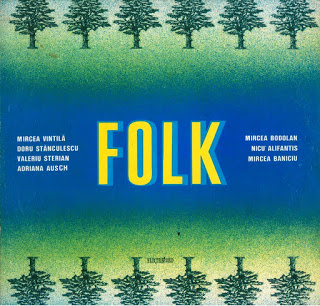
“La Seceriș” (1978) – Mircea Baniciu * Written by Petre Ghelmez and Mircea Baniciu * LP: Folk * Label: Electrecord

Among the pastoral beauties on this 1978 Romanian compilation is one by Mircea Baniciu, called “La Seceriș” (the harvest). The song captures him freshly abandoned by his former bandmates, who one day played with him as national favorites Phoenix, and the next day smuggled themselves out of their increasingly austere homeland. You listen and get the feeling that all Baniciu could do with this new development was to contemplate the fruits of the earth. Romanian music fans, though, would buoy him up and celebrate him to the present day. The lyricist Petre Ghelmez was a prolific Romanian poet and children’s author.

“Yo Hanino Tu Hanina” (2017) – Shirley Johnson with Oliver Rajamani

“Yo Hanino Tu Hanina” (2017) – Shirley Johnson with Oliver Rajamani * Written by Trad. Arr. * CD: Dancing Angels


Austin Texas-based accordionist and vocalist Shirley Johnson has Croatian roots, but she’s a specialist in many an international idiom. Her new album Dancing Angels includes a collaboration with fellow Austinite Oliver Rajamani (vocals and oud), on which she sets the accordion down, picks up her prim, and duets with him on a Bosnian Sephardic wedding song called “Yo Hanino Tu Hanina” (I’m handsome, you’re beautiful). Those vocals, along with the dancing strings, make this an addictive listen. They’re singing in Ladino, the nearly-extinct language of the Sephardic Jews who have populated a region of the world from Bosnia to North Africa to Turkey. You’ll hear its close linguistic relationship to Spanish.


“Voy Caminando” (2017) – Ani Cordero

“Voy Caminando” (2017) – Ani Cordero * Written and produced by Ani Cordero * CD: Querido Mundo


Ani Cordero is a New New York City-based singer-songwriter, but her roots go directly to Puerto Rico. Her song “Voy Caminando,” like all of her music, draws inspiration from the socially-aware nueva canción tradition, but its “I go walking, keep on walking” refrain resonates with a recharged sense of defiance in the wake of Hurricane Maria.

“Meidän Täytyy Päästä Täältä” (2017) – Joose Keskitalo

“Meidän Täytyy Päästä Täältä” (2017) – Joose Keskitalo * Written and produced by Joose Keskitalo * CD: Julius Caesarin Anatomia * Label: Helmi Levyt
 

With Julius Caesarin Anatomia (Julius Caesar’s Anatomy), Joose Keskitalo is now eight albums deep in his resolutely Finnish (language and mentality) songwriting career. The title of this highlight with the Kalo (Finnish Roma) vibe translates to “we need to get out of here,” but you listen and wish he’ll stick around in whatever language he wants. Joose’s brother Alex handles the vocals, and the lead instrument is a bandoneon, the type of accordion favored in the tango music so many Finns adore. 

“Mon Chemin” (2017) – Bruce Cockburn

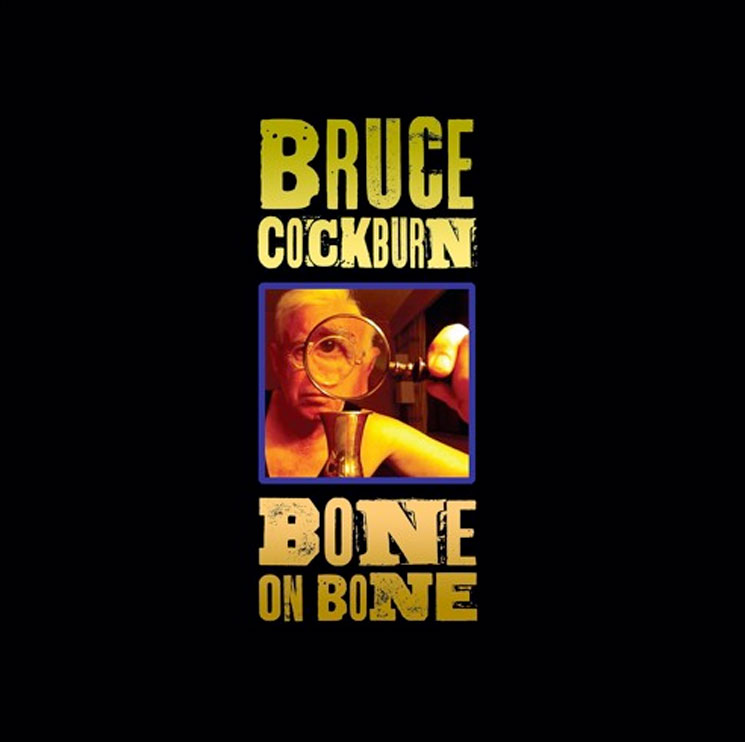
“Mon Chemin” (2017) – Bruce Cockburn * Written by Bruce Cockburn * Produced by Colin Linden * CD: Bone on Bone * Label: True North

His 25th album Bone on Bone really moves, with his chugging acoustic guitar upfront and no dirges. He’s still in self-evaluation mode, having just published an autobiography, but on this outing the ruminations growl. “Mon Chemin” (my road) is one of a handful of songs Bruce Cockburn has delivered in Quebecois over the decades. Radio programmers will need to take care and possibly drop the volume on the phrase putain de détours. That’s Bruce’s nephew John Aaron Cockburn singing harmony.

“Najteir Alaila Anadal Lihuela” (2014/2017) – Mariem Hassan

“Najteir Alaila Anadal Lihuela” (2014/2017) – Mariem Hassan * Written by Zaim Alal, Mariem Hassan, and Ravid Kahalani


So arresting were the vocals of the Western Saharan Mariem Hassan that one needed no primer in her Hassaniyyan language to get the emotional message. Before she passed away in 2015, she had recorded this track (under the title “Tonight I Will Be Pretty”) for an album by Ravid Kahalani’s Yemen Blues. The version on her posthumous 2017 La Voz Indomita collection, though, strips away everything but the barest essentials—including her desert bird trills—and it’s a jewel.

“Tumša Nakte” (2009) – Baļķi

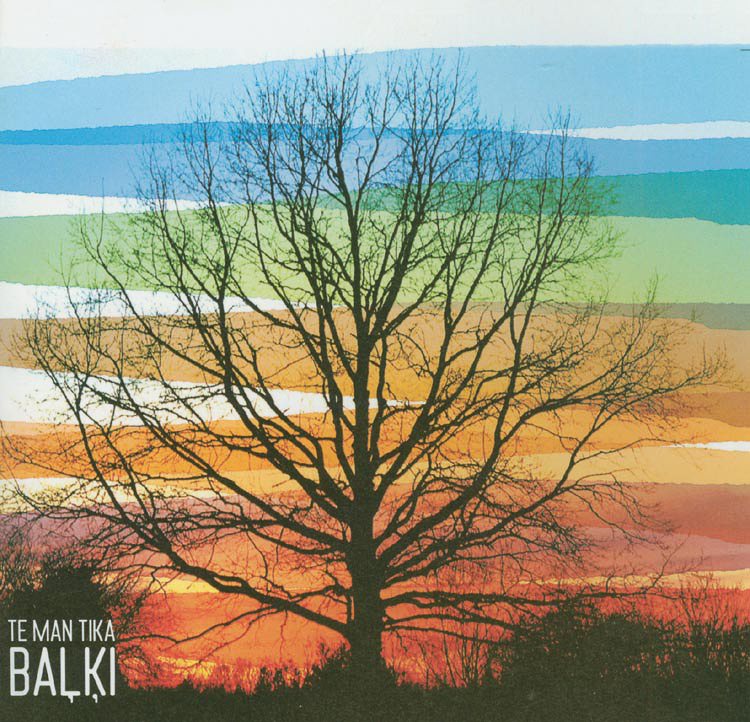
“Tumša Nakte” (2009) – Baļķi * Written by Trad. Arr. * CD: Te Man Tika * Label: Lauska
 

No violation of the Baltic post-folk mandate of 13th-century apparel and group-singing occurs here, which is certainly not a problem. This Latvian group’s name is Baļķi, which means “logs” and is pronounced somewhat like “balchy.” They formed in 2000 in the port town of Liepāja, and have since recorded three albums, having maintained a consistent berobed druid look. The songs on their second album Te Man Tiki (2009) (I was here), focus on springtime themes and are presumably all traditional.

“Sault Ste. Marie” (1973) – The Original Caste


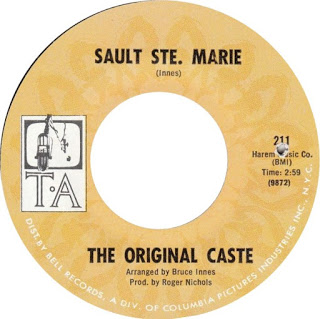
“Sault Ste. Marie” (1971) – The Original Caste * Written and arranged by Bruce Innes * Produced by Roger Nichols * 45: “Sault Ste. Marie” / “When Love Is Near” * Charts: Canada #35

Calgary’s Original Caste enjoyed a flurry of Canadian success between 1968 and 1971, after their version of the Dennis Lambert-Brian Potter song “One Tin Soldier” made the US Top 40.  Their sixth and final Canadian chart hit (not counting a 1973 revival of “Soldier”) happened in 1971, and was one of those situations where the radio stations ignored the A-side (a Paul Williams-Roger Nichols tune called “When Love Is Near”) and jumped all over the B-side, written by the band’s own Bruce Innes. In RPM Weekly, the Canadian music biz trade paper of the day, a young Terry David Mulligan praised “Sault Ste. Marie,” saying it was “about time the very talented and highly creative leader of this Canadian group received some recognition.” Mulligan and the radio stations were right about “Sault Ste. Marie,” which was a Canada-centric road song built to last, with a classic line in the chorus: “I’m just trying to make it to Montreal / I do believe that I’m going to hell.” In truth, the Original Caste were on their way to Japan for some touring, then into the studio, eventually, for one more album in 1974, but no more rides up any pop charts.